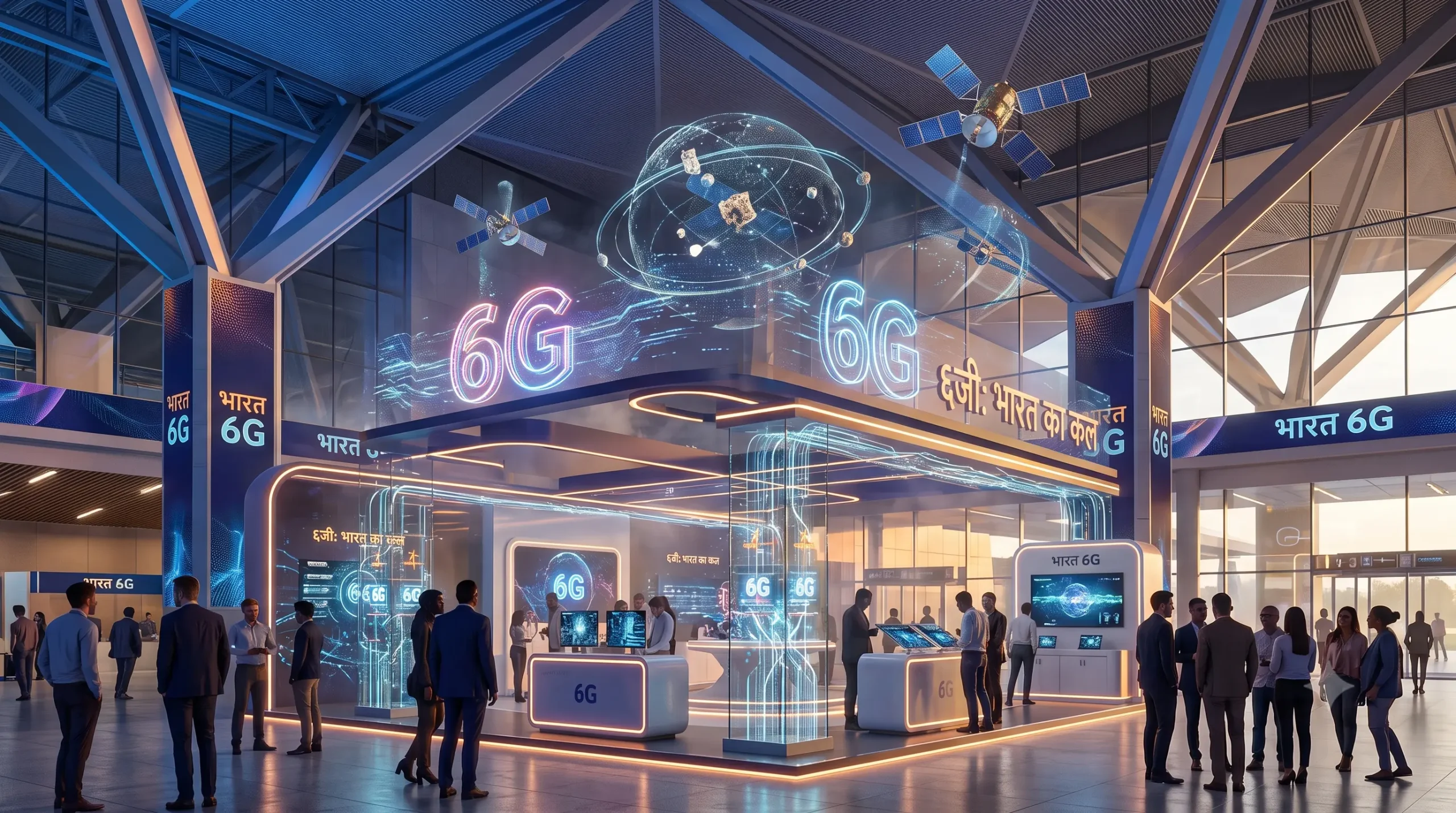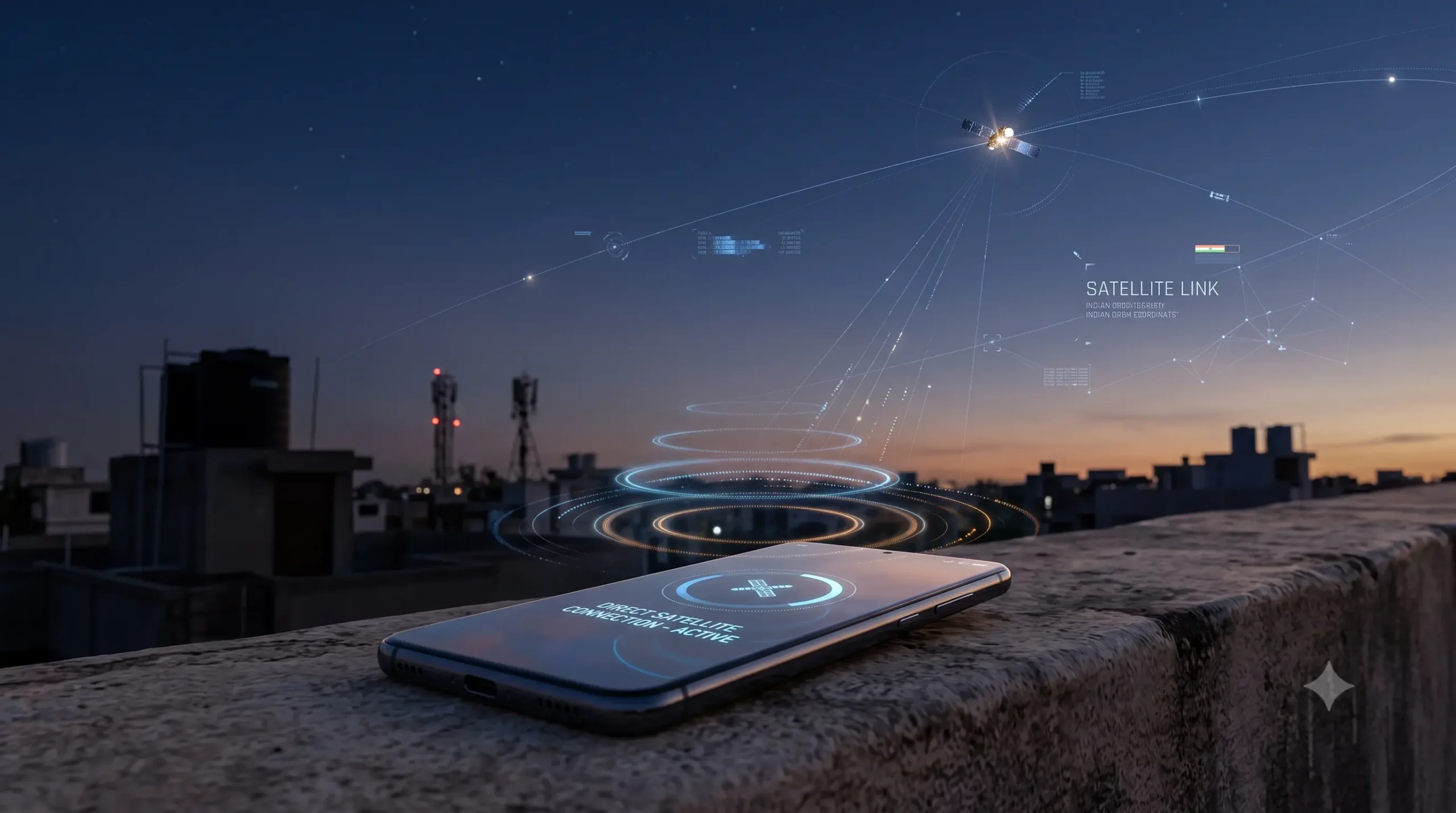

The regulatory clearance of direct to device satellite connectivity India marks a transformative leap in personal mobile communications. For decades, mobile phones remained entirely dependent on physical terrestrial cell towers spaced across highways and cities. However, when entering dense forest reserves, high-altitude mountain passes, or deep offshore waters, mobile signals disappeared completely. Under the newly approved policy framework, standard commercial smartphones will soon communicate directly with orbiting low-Earth satellites. Consequently, Indian travelers, emergency teams, and rural communities will soon experience true zero-dead-zone connectivity.
Therefore, discovering the mechanics of direct to device satellite connectivity India reveals how space-based networks integrate with everyday mobile handsets.
How Direct-to-Device (D2D) Technology Operates
Unlike traditional satellite phones that require bulky external antennas, D2D technology operates invisibly on standard phone hardware:
- Cell Tower in Space: Low-Earth orbit (LEO) satellites carry advanced beamforming phased-array antennas that act essentially as orbiting cell towers.
- Standard Cellular Bands: Satellites broadcast radio signals on licensed terrestrial frequencies (such as mid-band LTE and 5G spectrum).
- No Custom Hardware Required: Compatible 4G and 5G smartphones connect to satellite frequencies without needing external add-on adapters or dedicated hardware dishes.
Evolutionary Breakdown: Terrestrial Cellular vs D2D Space Networks
To evaluate how satellite links complement ground networks, compare the operational parameters below:
| Network Metric | Ground Cellular Towers | Direct-to-Device (D2D) Satellite |
|---|---|---|
| Coverage Footprint | Limited to line of sight of ground towers (~5 to 15 km) | Global reach across oceans, mountains, and deserts |
| Primary Purpose | High-speed gigabit downloads and streaming | Emergency SOS, SMS texting, and essential voice links |
| Disaster Reliability | Can fail during floods, cyclones, or power cuts | Immune to terrestrial power failures and natural disasters |
| Hardware Requirement | Standard mobile antenna array | Compatible 3GPP Release-17 standard modem chipsets |
As a result, space connectivity acts as an unbreakable safety net rather than a complete replacement for high-speed fiber city networks.
Phase-Wise Rollout: What Features Go Live First?
The Department of Telecommunications has outlined a structured multi-phase deployment roadmap:
- Phase 1 (Emergency SOS & Location Beacons): Users stranded without ground signals can transmit emergency SOS distress signals and GPS coordinates to civil rescue bodies.
- Phase 2 (Two-Way SMS & Messaging): Subscribers can send and receive basic two-way text messages across remote geographical regions.
- Phase 3 (Voice Calling & Data Bursts): Continuous satellite coverage constellations will enable standard voice calls and light IoT data transmission.
Meanwhile, to understand how satellite internet links interact with national telecom summits, read our report on India Mobile Congress 2026 highlights.
Smartphone Compatibility and Battery Considerations
Transmitting radio signals across hundreds of kilometers into low Earth orbit demands precise energy efficiency. While newer modems manage power consumption carefully, prolonged satellite tracking can draw noticeable power from mobile cells.
Consumers can explore how high-capacity battery tech addresses high-power connectivity demands in our analysis on silicon carbon battery phones.
For official licensing guidelines, spectrum allocation notices, and technical standard circulars, visit the official Department of Telecommunications (DoT) portal.
Security Oversight and Gateway Protocols
Because satellite communications bypass physical ground infrastructure, central security bodies require all orbital signals to pass through physical earth stations situated inside Indian territory. Consequently, this architecture ensures full compliance with statutory emergency interception and national cyber-safety guidelines.
Final Takeaway
In summary, direct to device satellite connectivity India is set to eliminate dead zones from the country’s communication map. While urban consumers will continue using traditional 5G towers for daily heavy streaming, satellite fallbacks guarantee that no traveler remains completely unreachable during emergencies. Ultimately, this integration bridges the last gap in India’s universal digital connectivity journey.
Regulatory Compliance and Consumer Safeguards
To ensure citizen data privacy, telecom regulatory authorities enforce strict data localization rules. Furthermore, all orbital transmission links connect exclusively through authorized ground teleport hubs within national boundaries to maintain secure network verification.